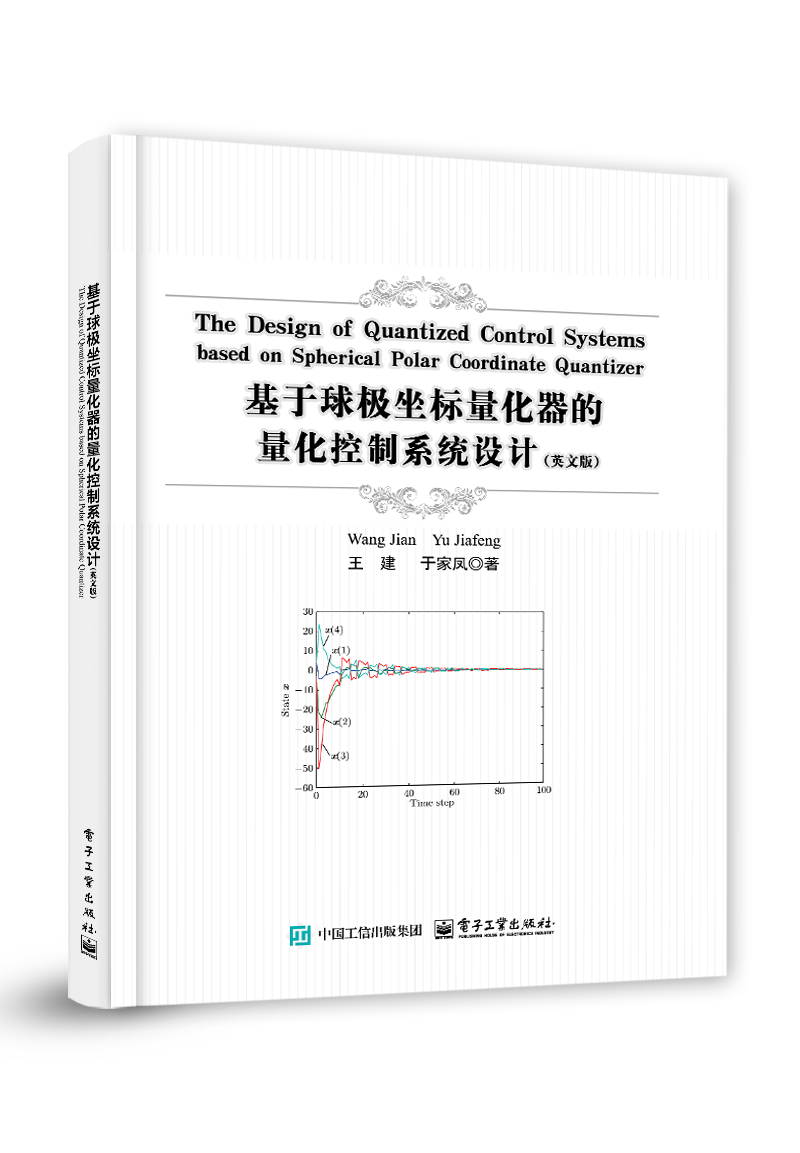
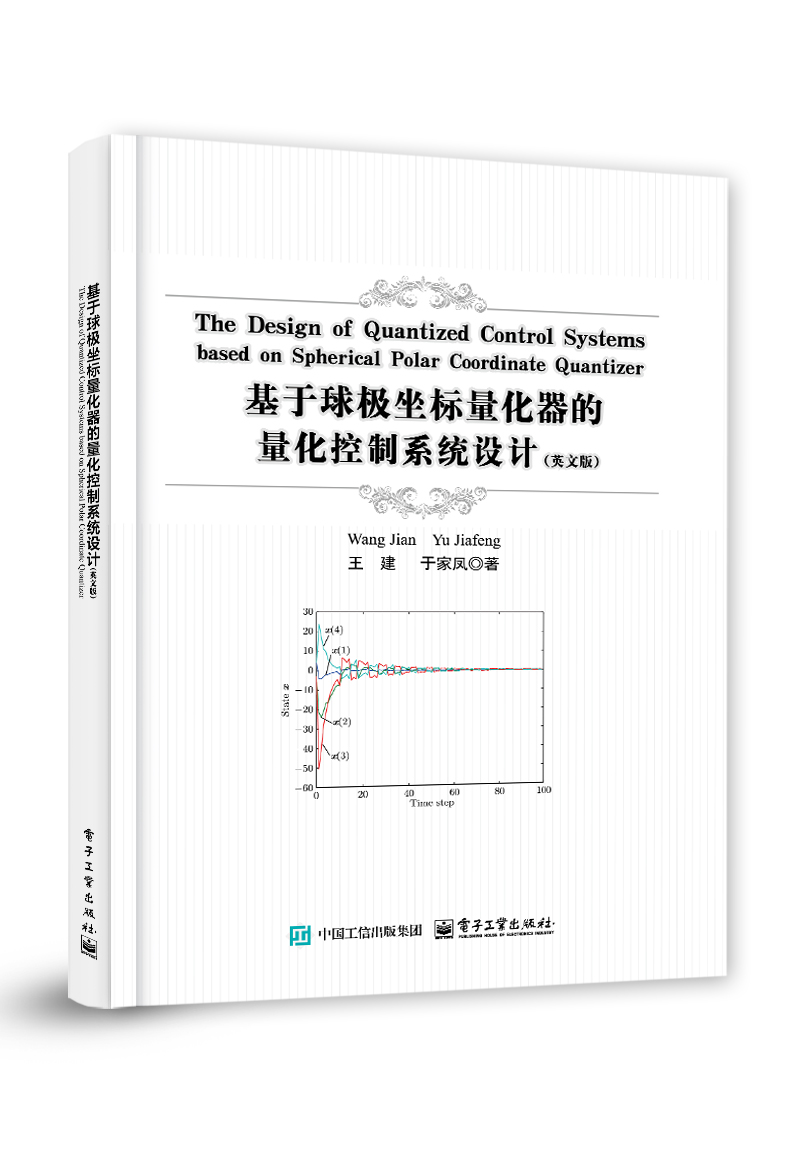
基于球极坐标量化器的量化控制系统设计
作 译 者:王建
出 版 日 期:2026-03-01
书 代 号:TN522450
I S B N:9787121522451
图书简介:
本书针对目前文献中常用的均匀量化器和对数量化器在设计量化控制系统时的缺点,作者提出一种适用于量化控制系统的新的编码方案:基于球极座标的编码方案。这种编码方案显著不同于现有的编码方案,它的编码和解码基于球极座标,在量化控制系统设计中不但可以简化系统设计和稳定性分析,而且使用有限信道码率,便于实际应用。本书给出了球极座标编码方案的新的参数设计方法,降低对信道码率的需求,进一步将量化控制系统转化为参数不确定系统,提出了基于球极座标编码方案的虚拟状态量化方法,分别用于单信道量化控制系统和双信道嵌套量化控制系统的设计,保证量化控制系统的稳定性,解决了20年来没有实质性进展的嵌套量化控制系统设计问题。球极座标编码方案是量化控制研究领域的新方法,为量化控制系统的分析与设计提供新的手段。

-
配 套 资 源
本书资源
本书暂无资源 -
图 书 内 容
内容简介
本书针对目前文献中常用的均匀量化器和对数量化器在设计量化控制系统时的缺点,作者提出一种适用于量化控制系统的新的编码方案:基于球极座标的编码方案。这种编码方案显著不同于现有的编码方案,它的编码和解码基于球极座标,在量化控制系统设计中不但可以简化系统设计和稳定性分析,而且使用有限信道码率,便于实际应用。本书给出了球极座标编码方案的新的参数设计方法,降低对信道码率的需求,进一步将量化控制系统转化为参数不确定系统,提出了基于球极座标编码方案的虚拟状态量化方法,分别用于单信道量化控制系统和双信道嵌套量化控制系统的设计,保证量化控制系统的稳定性,解决了20年来没有实质性进展的嵌套量化控制系统设计问题。球极座标编码方案是量化控制研究领域的新方法,为量化控制系统的分析与设计提供新的手段。图书详情
ISBN:9787121522451开 本:16(170*240)页 数:204字 数:316本书目录
目录 第1 章球极坐标量化器. . . . . . . . . . . . . . . . . . . . . . . . . . . . . . . . . . . . . . . . . . . . . . . . . . . .1 1.1 基于球极坐标系的量化器. . . . . . . . . . . . . . . . . . . . . . . . . . . . . . . . . . . . . . . . . . 3 1.2 量化误差的估计. . . . . . . . . . . . . . . . . . . . . . . . . . . . . . . . . . . . . . . . . . . . . . . . . . . 5 1.3 有限信道码率量化器. . . . . . . . . . . . . . . . . . . . . . . . . . . . . . . . . . . . . . . . . . . . . . .7 1.4 定理1.1 的证明. . . . . . . . . . . . . . . . . . . . . . . . . . . . . . . . . . . . . . . . . . . . . . . . . . . . 9 第2 章基于球极坐标量化器的量化反馈控制. . . . . . . . . . . . . . . . . . . . . . . . . . . . . 15 2.1 使用无限码率的量化反馈控制. . . . . . . . . . . . . . . . . . . . . . . . . . . . . . . . . . . . 15 2.2 使用有限码率的量化反馈控制. . . . . . . . . . . . . . . . . . . . . . . . . . . . . . . . . . . . 18 2.3 结论. . . . . . . . . . . . . . . . . . . . . . . . . . . . . . . . . . . . . . . . . . . . . . . . . . . . . . . . . . . . . . 26 第3 章基于球极坐标量化器的量化动态输出反馈控制. . . . . . . . . . . . . . . . . . . 28 3.1 使用有限码率的量化反馈控制. . . . . . . . . . . . . . . . . . . . . . . . . . . . . . . . . . . . 28 3.1.1 情况一:控制器输出被量化. . . . . . . . . . . . . . . . . . . . . . . . . . . . . . . . . . . . 29 3.1.2 情况二:系统输出被量化. . . . . . . . . . . . . . . . . . . . . . . . . . . . . . . . . . . . . . 36 3.2 结论. . . . . . . . . . . . . . . . . . . . . . . . . . . . . . . . . . . . . . . . . . . . . . . . . . . . . . . . . . . . . . 41 3.3 附录. . . . . . . . . . . . . . . . . . . . . . . . . . . . . . . . . . . . . . . . . . . . . . . . . . . . . . . . . . . . . . 41 第4 章量化状态反馈下的周期切换控制. . . . . . . . . . . . . . . . . . . . . . . . . . . . . . . . . .46 4.1 问题描述. . . . . . . . . . . . . . . . . . . . . . . . . . . . . . . . . . . . . . . . . . . . . . . . . . . . . . . . . 46 4.2 稳定的周期切换率存在的条件. . . . . . . . . . . . . . . . . . . . . . . . . . . . . . . . . . . . 48 4.3 基于球极坐标量化器的量化反馈控制. . . . . . . . . . . . . . . . . . . . . . . . . . . . .51 4.3.1 使用无限码率的量化状态反馈. . . . . . . . . . . . . . . . . . . . . . . . . . . . . . . . . . 51 4.3.2 使用有限码率的量化状态反馈. . . . . . . . . . . . . . . . . . . . . . . . . . . . . . . . . . 55 4.4 结论. . . . . . . . . . . . . . . . . . . . . . . . . . . . . . . . . . . . . . . . . . . . . . . . . . . . . . . . . . . . . . 62 第5 章具有嵌套量化的离散时间线性系统的量化反馈控制. . . . . . . . . . . . . . 63 5.1 问题描述. . . . . . . . . . . . . . . . . . . . . . . . . . . . . . . . . . . . . . . . . . . . . . . . . . . . . . . . . 66 5.2 使用有限码率的量化反馈控制. . . . . . . . . . . . . . . . . . . . . . . . . . . . . . . . . . . . 67 5.3 结论. . . . . . . . . . . . . . . . . . . . . . . . . . . . . . . . . . . . . . . . . . . . . . . . . . . . . . . . . . . . . . 82 5.4 附录. . . . . . . . . . . . . . . . . . . . . . . . . . . . . . . . . . . . . . . . . . . . . . . . . . . . . . . . . . . . . . 82 第6 章具有分布输入和输出量化的离散时间线性系统的量化反馈控制. . 85 6.1 问题描述. . . . . . . . . . . . . . . . . . . . . . . . . . . . . . . . . . . . . . . . . . . . . . . . . . . . . . . . . 87 6.2 使用有限码率的量化反馈控制. . . . . . . . . . . . . . . . . . . . . . . . . . . . . . . . . . . . 89 6.3 控制器和量化器参数的求解. . . . . . . . . . . . . . . . . . . . . . . . . . . . . . . . . . . . . 103 6.4 结论. . . . . . . . . . . . . . . . . . . . . . . . . . . . . . . . . . . . . . . . . . . . . . . . . . . . . . . . . . . . . 109 第7 章具有嵌套量化的连续时间线性系统的量化反馈控制. . . . . . . . . . . . . 110 7.1 问题描述. . . . . . . . . . . . . . . . . . . . . . . . . . . . . . . . . . . . . . . . . . . . . . . . . . . . . . . . 112 7.2 使用有限码率的量化反馈控制. . . . . . . . . . . . . . . . . . . . . . . . . . . . . . . . . . . 113 7.3 结论. . . . . . . . . . . . . . . . . . . . . . . . . . . . . . . . . . . . . . . . . . . . . . . . . . . . . . . . . . . . . 127 7.4 附录. . . . . . . . . . . . . . . . . . . . . . . . . . . . . . . . . . . . . . . . . . . . . . . . . . . . . . . . . . . . . 127 第8 章具有嵌套量化的连续时间Lur’e 系统的量化反馈控制. . . . . . . . . . 130 8.1 问题描述. . . . . . . . . . . . . . . . . . . . . . . . . . . . . . . . . . . . . . . . . . . . . . . . . . . . . . . . 132 8.2 使用有限码率的量化反馈控制. . . . . . . . . . . . . . . . . . . . . . . . . . . . . . . . . . . 134 8.2.1 Lur’e 非线性的等式表达. . . . . . . . . . . . . . . . . . . . . . . . . . . . . . . . . . . . . . 134 8.2.2 使用有限码率的量化反馈控制. . . . . . . . . . . . . . . . . . . . . . . . . . . . . . . . . 135 8.3 仿真. . . . . . . . . . . . . . . . . . . . . . . . . . . . . . . . . . . . . . . . . . . . . . . . . . . . . . . . . . . . . 144 8.4 结论. . . . . . . . . . . . . . . . . . . . . . . . . . . . . . . . . . . . . . . . . . . . . . . . . . . . . . . . . . . . . 146 8.5 附录. . . . . . . . . . . . . . . . . . . . . . . . . . . . . . . . . . . . . . . . . . . . . . . . . . . . . . . . . . . . . 146 第9 章擦除信道条件下具有嵌套量化的离散时间线性系统的 几乎处处稳定性. . . . . . . . . . . . . . . . . . . . . . . . . . . . . . . . . . . . . . . . . . . . . . . . . 150 9.1 问题描述. . . . . . . . . . . . . . . . . . . . . . . . . . . . . . . . . . . . . . . . . . . . . . . . . . . . . . . . 152 9.2 有限码率擦除信道条件下的量化反馈控制. . . . . . . . . . . . . . . . . . . . . . .154 9.2.1 基于球极坐标量化器的量化方法. . . . . . . . . . . . . . . . . . . . . . . . . . . . . . . 154 9.2.2 使用有限码率的量化反馈控制. . . . . . . . . . . . . . . . . . . . . . . . . . . . . . . . . 159 9.3 结论. . . . . . . . . . . . . . . . . . . . . . . . . . . . . . . . . . . . . . . . . . . . . . . . . . . . . . . . . . . . . 181 参考文献. . . . . . . . . . . . . . . . . . . . . . . . . . . . . . . . . . . . . . . . . . . . . . . . . . . . . . . . . . . . . . . . . . 182 Contents Chapter 1 Spherical polar coordinate quantizer. . . . . . . . . . . . . . . . . . . . . . .1 1.1 Quantizer based on spherical polar coordinates . . . . . . . . . . . . . . . . . . . . . 3 1.2 Estimate of quantization error . . . . . . . . . . . . . . . . . . . . . . . . . . . . . . . . . . . . . . 5 1.3 Quantizer of finite channel data rate . . . . . . . . . . . . . . . . . . . . . . . . . . . . . . . . 7 1.4 Proof of Theorem 1.1 . . . . . . . . . . . . . . . . . . . . . . . . . . . . . . . . . . . . . . . . . . . . . . . 9 Chapter 2 Quantized feedback control based on spherical polar coordinate quantizer . . . . . . . . . . . . . 15 2.1 Quantized feedback control with infinite data rate . . . . . . . . . . . . . . . . . 15 2.2 Quantized feedback control with finite data rate . . . . . . . . . . . . . . . . . . . 18 2.3 Conclusion . . . . . . . . . . . . . . . . . . . . . . . . . . . . . . . . . . . . . . . . . . . . . . . . . . . . . . . . 26 Chapter 3 Dynamic output feedback control under quantization based on spherical polar coordinate quantizer ...28 3.1 Quantized feedback control with finite data rate . . . . . . . . . . . . . . . . . . . 28 3.1.1 Case I: Only the controller output is quantized . . . . . . . . . . . . . . . . . . . .29 3.1.2 Case II: Only the system output is quantized. . . . . . . . . . . . . . . . . . . . . .36 3.2 Conclusion . . . . . . . . . . . . . . . . . . . . . . . . . . . . . . . . . . . . . . . . . . . . . . . . . . . . . . . . 41 3.3 Appendix . . . . . . . . . . . . . . . . . . . . . . . . . . . . . . . . . . . . . . . . . . . . . . . . . . . . . . . . . 41 Chapter 4 Periodic switching control under quantized state feedback . . . . . . . . . . . . . . . . . . . 46 4.1 Problem statement . . . . . . . . . . . . . . . . . . . . . . . . . . . . . . . . . . . . . . . . . . . . . . . . 46 4.2 The condition for the existence of stabilizing periodic switching law. . . . . . . . . . . . . . . . .48 4.3 Quantized feedback control based on spherical polar coordinate quantizer . . . . . . . . . . 51 4.3.1 Quantized state feedback with infinite data rate . . . . . . . . . . . . . . . . . . . 51 4.3.2 Quantized state feedback with finite data rate . . . . . . . . . . . . . . . . . . . . 55 4.4 Conclusion . . . . . . . . . . . . . . . . . . . . . . . . . . . . . . . . . . . . . . . . . . . . . . . . . . . . . . . . 62 Chapter 5 Quantized feedback control of discrete-time linear systems with nested quantization . . . . . . . . . . . 63 5.1 Problem statement . . . . . . . . . . . . . . . . . . . . . . . . . . . . . . . . . . . . . . . . . . . . . . . . 66 5.2 Quantized feedback control with finite data rate . . . . . . . . . . . . . . . . . . . 67 5.3 Conclusion . . . . . . . . . . . . . . . . . . . . . . . . . . . . . . . . . . . . . . . . . . . . . . . . . . . . . . . . 82 5.4 Appendix . . . . . . . . . . . . . . . . . . . . . . . . . . . . . . . . . . . . . . . . . . . . . . . . . . . . . . . . . 82 Chapter 6 Quantized feedback control of discrete-time linear systems with distributed input and output quantization .. . . . 85 6.1 Problem statement . . . . . . . . . . . . . . . . . . . . . . . . . . . . . . . . . . . . . . . . . . . . . . . . 87 6.2 Quantized feedback control with finite data rate . . . . . . . . . . . . . . . . . . . 89 6.3 The method to obtain the parameters of the controller and the quantizers. . . . . . . . . . . . . . . . . . . . . . . . . . . . . . . . . . . . . . . . . . . . . . . . . . . . . . . .103 6.4 Conclusion . . . . . . . . . . . . . . . . . . . . . . . . . . . . . . . . . . . . . . . . . . . . . . . . . . . . . . . 109 Chapter 7 Quantized feedback control of continuous-time linear systems with nested quantization . .. . . . . 110 7.1 Problem statement . . . . . . . . . . . . . . . . . . . . . . . . . . . . . . . . . . . . . . . . . . . . . . . 112 7.2 Quantized feedback control with finite data rate . . . . . . . . . . . . . . . . . . 113 7.3 Conclusion . . . . . . . . . . . . . . . . . . . . . . . . . . . . . . . . . . . . . . . . . . . . . . . . . . . . . . . 127 7.4 Appendix . . . . . . . . . . . . . . . . . . . . . . . . . . . . . . . . . . . . . . . . . . . . . . . . . . . . . . . . 127 Chapter 8 Quantized feedback control of continuous-time Lur’e systems with nested quantization . . . . . . . . . . 130 8.1 Problem statement . . . . . . . . . . . . . . . . . . . . . . . . . . . . . . . . . . . . . . . . . . . . . . . 132 8.2 Quantized feedback control with finite data rate . . . . . . . . . . . . . . . . . . 134 8.2.1 Equality expression of Lur’e nonlinearity . . . . . . . . . . . . . . . . . . . . . . . . 134 8.2.2 Quantized feedback control with finite data rate . . . . . . . . . . . . . . . . . 135 8.3 Simulation . . . . . . . . . . . . . . . . . . . . . . . . . . . . . . . . . . . . . . . . . . . . . . . . . . . . . . . 144 8.4 Conclusion . . . . . . . . . . . . . . . . . . . . . . . . . . . . . . . . . . . . . . . . . . . . . . . . . . . . . . . 146 8.5 Appendix . . . . . . . . . . . . . . . . . . . . . . . . . . . . . . . . . . . . . . . . . . . . . . . . . . . . . . . . 146 Chapter 9 Almost sure stability of discrete-time linear systems subject to need quantization under erasure channels . . . . 150 9.1 Problem statement . . . . . . . . . . . . . . . . . . . . . . . . . . . . . . . . . . . . . . . . . . . . . . . 152 9.2 Quantized feedback control under erasure channels of limited data rate . . . . . . . . . . . . . . . . . . . . . . . 154 9.2.1 The quantization method under spherical polar coordinate quantizer . . . . . . . .. . . . . . . . . . 154 9.2.2 Quantized feedback control with limited data rate . . . . . . . . . . . . . . . . 159 9.3 Conclusion . . . . . . . . . . . . . . . . . . . . . . . . . . . . . . . . . . . . . . . . . . . . . . . . . . . . . . . 181 References. . . . . . . . . . . . . . . . . . . . . . . . . . . . . . . . . . . . . . . . . . . . . . . . . . . . . . . . . . . . . . . .182展开前 言
前言 本书提出了一种新型量化控制器。不同于传统的均匀量化器和对数量化器,该量化器基于球极坐标系构建,保证被量化向量与对应量化误差之间存在明确的数学关系:被量化向量幅值与量化误差幅值的上界成正比,这一特性为量化 器的理想属性。相较于均匀量化器,该量化器具有两大优势:其一是上面提到的被量化向量与其量化误差的确定关系;其二是可与二次型Lyapunov 函数完美契合,其椭球型量化区域与Lyapunov 水平集精确匹配,便于分析包含被量化向量的时变有界量化区域的演化行为。较之于对数量化器,本量化器可使用有限信道码率,便于实际应用。基于被量化数据与其量化误差的确定关系,量化误差可转化为扇形有界不确定性,从而将全书涉及的量化反馈设计问题转化为鲁棒控制问题,而传统的均匀量化器和对数量化器难以解决本书所研究的问题。 全书分为两部分。第一部分(第1~4 章)提出球极坐标量化器(第1 章),并解决单信道量化控制系统问题(第2~4章)。单信道是指系统只有从系统输出至控制器输入的信道(输出量化),或者只有从控制器输出至系统输入的信道(输入量化)。第1 章针对传统量化器的不足,提出基于球极坐标的编码方案,其优点在于:①建立被量化数据与其量化误差的确定关系(均匀量化器不具备);②仅需有限信道码率,便于实际应用(对数量化器不具备)。基于该关系,量化误差可转化为扇形有界不确定性,使量化反馈问题转化为经典鲁棒控制问题。第2 章利用该量化器,将状态反馈下的线性系统二次镇定问题转化为具有扇形有界不确定性的鲁棒控制问题。针对有限信道码率情形,提出时变有界量化区域的确定方法。第3 章研究有限信道码率下动态输出反馈系统的量化与控制器协同设计。第4 章提出离散线性系统周期切换控制的新判据,基于球极坐标量化器分别给出无限/有限信道码率下的量化状态反馈方案。 第二部分(第5~9 章)研究双信道(输入/输出同时量化)下的嵌套量化系统。嵌套量化特指一个量化算子的输出直接作为另一个量化算子的输入的情形,其复杂性远超普通双重量化。第5 章针对离散MIMO 系统,通过构造包含虚拟增广向量的优化问题,提出有限信道码率下的嵌套量化方法。第6 章证明在分布式输入输出场景下,多个不确定矩阵可统一为一个公共矩阵,简化系统设计。第7 章基于Krasovskii 解理论,解决连续MIMO 系统嵌套量化导致的微分方程右端不连续问题。第8 章将Lur’e 型非线性系统的量化误差与非线性项统一转化为范数有界矩阵描述的扇形不确定性。第9 章针对数据包丢失信道,构建包含系统真实值与历史量化值的动态系统,将几乎处处稳定性问题 转化为随机差分系统的稳定性分析。 本书成果为作者在量化反馈控制领域最近几年研究的系统性总结。本书出版获得国家自然科学基金(项目编号为62273056)、江苏省自然科学基金(项目编号为BK20231112)和渤海大学的支持,在此深表感谢! 作者 2025 年2 月 Preface Different from uniform quantizer and logarithmic quantizer, this book proposes a novel quantizer for quantized control systems. This quantizer is based on spherical polar coordinates and ensures a definite relationship between the quantized vector and the corresponding quantization error. The relationship shows that the magnitude of the quantized vector is proportional to an upper bound of the magnitude of the corresponding quantization error, which is a desired property of the quantizer. Compared with the uniform quantizer, apart from the desired relationship between the quantized vector and the corresponding quantization error, another advantage of the proposed quantizer is that it can be combined with quadratic Lyapunov function harmoniously and Lyapunov level set can match the ellipsoidal quantization region, which facilitates the analysis of the evolution behavior of time-varying bounded quantization region containing the quantized vector. Compared with the logarithmic quantizer, the proposed quantizer could use finite channel data rate, which facilitates practical implementation. Based on the relationship between the quantized data and the corresponding quantization error, the quantization error can be converted to sector bound uncertainty. Consequently, all quantized feedback design problems in this book are converted to robust control problems. It is difficult and even impossible to use the uniform quantizer and logarithmic quantizer to solve the problems addressed in this book. The content of this book consists of two parts. The first part (in Chapter 1-4) proposes a spherical polar coordinate quantizer (in Chapter 1) and addresses the quantized control systems with a single network channel (in Chapter 2-4). By the single network channel we mean that the network channel spans from the system output to the controller input or the channel spans from the controller output to the system input, that is, only the information of the system output is quantized and transmitted to the controller input (output quantization) or only the information of the controller output is quantized and transmitted to the system input (input quantization). Chapter 1 addresses the shortcomings of the commonly used uniform quantizers and logarithmic quantizers while designing quantized control systems, and proposes an encoding scheme based on spherical polar coordinates. The existing literature encodes the system information in Cartesian coordinates. Different from this, the proposed encoding scheme is based on the spherical polar coordinates. One advantage of this encoding scheme is that it establishes a definite relationship between the quantizatized data and the quantization error. This definite relationship is not possessed by the uniform quantization method and is convenient for the stability analysis of the system. Another advantage is that the encoding scheme only requires a limited channel data rate, which is not possessed by the logarithmic quantization method. Based on the relationship between the quantized data and the corresponding quantization error, the quantization error can be converted to sector bound uncertainty. Thus, many quantized feedback problems are converted to well-known robust control problems. As basic results, in Chapter 2, by utilizing the proposed quantizer with infinite data rate, the quadratic stabilization problems of linear systems via state feedback under quantization can be converted to the same problems of the corresponding robust control systems with sector bound uncertainties. Further, from a practical point of view, we are more concerned with quantized feedback control with finite data rate, so the quantizer with finite data rate in Chapter 1 is used for the above problems. Different from the quantizer with infinite data rate, the quantizer with finite data rate needs to determine a time-varying bounded quantization region to contain the quantized vector as the system evolves. Under this circumstance, the vector needed to be quantized can not be quantized directly, so we propose a quantization method to solve this problem. Chapter 3 utilizes the spherical polar coordinate quantizer for the design problems of quantized feedback systems with dynamic output feedback. Under the quantizer with finite data rate, a time-varying bounded quantization region needs to be determined to contain the quantized vector as the system evolves. Under this circumstance, some entries of the quantized vector are not available to the quantizer with finite data rate such that the vector can not be quantized directly; therefore, a quantization and controller design method is proposed to solve this problem. Chapter 4 studies periodic switching control under quantized state feedback for discrete-time linear systems. Firstly, a novel necessary and sufficient condition is presented for the existence of the stabilizing periodic switching law for the systems, by which the periodic switching law with a shorter period is obtained. Secondly, based on this condition and by the spherical polar coordinate quantizer, we give a quantized state feedback control with infinite data rate for the periodic switching law. Finally, a quantization method with finite data rate is designed for the stabilizing periodic switching law under quantized state feedback. The second part (in Chapter 5-9) addresses the quantized control systems with dual network channels. By dual network channels we mean that the systems are subject to both the network channel from the system output to the controller input and the channel from the controller output to the system input, that is, not only is the system output quantized and transmitted to the controller (output quantization) but also the controller output is quantized and transmitted to the system input (input quantization). For the systems with input quantization and output quantization, this book studies complex systems: the systems with nested quantization. The nested quantization involves input quantization and output quantization, but it is not equivalent to the coexistence of input quantization and output quantization. Only when the output of one quantization operator directly becomes the input of the other one, is the nested quantization produced. The complexity introduced by the nested quantization immensely impedes the design of the systems. Chapter 5 considers a control problem of discrete-time MIMO linear systems with nested quantization. Based on the spherical polar coordinate quantizer, a quantization method with finite data rate is proposed for handling the nested quantization and achieving the convergence to the origin of the system with the nested quantization. Further, an optimization problem is developed for each quantizer, of which the optimal solution set contains a virtual augmented vector. The quantizers quantize their respective virtual augmented vectors to obtain the estimates of the outputs of the plant and the controller. We present the analytical expression of the optimal solution set for each quantizer. Finally, a method is presented to obtain the parameters of the quantizers and the controller. In Chapter 6, the system inputs are distributed geographically and can not communicate with one another, and the system outputs are also distributed geographically and can not communicate with one another. Each output of the system is quantized and sent to the corresponding input of the dynamic output feedback controller over the finite data rate channel, and each input of the system receives the corresponding quantized output of the controller over the finite data rate channel. However, under distributed inputs and distributed outputs, since each quantization error is modeled by a sector bound uncertain matrix, the method in Chapter 5 will lead to too many uncertain matrices, which brings the difficulty to the design of the systems. Chapter 6 proves that these uncertain matrices can be replaced with a common matrix, which facilitates the design of the systems and improves the results in Chapter 5. Chapter 7 studies a control problem of continuous MIMO linear systems with nested quantization. Owing to the quantization error, the resulting closedloop system is described by a discontinuous right-hand side differential equation and the notion of Krasovskii solution is adopted for the equation. By Krasovskii solution, the update rule of the quantization region is designed to ensure the convergence to the origin of the system with the nested quantization and avoid the quantizer saturation. Further, since the quantizers can not directly quantize the controller output and the system output, we develop an optimization problem for each quantizer, of which the optimal solution set contains a virtual augmented vector. The quantizers quantize their respective virtual augmented vectors to obtain the estimates of the outputs of the plant and the controller. Finally, a method is presented to obtain the parameters of the controller. Chapter 8 studies a control problem of continuous-time Lur’e systems with the nested quantization. Based on the spherical polar coordinate quantizer, both the quantization errors the and Lur’e-type nonlinearity are converted to sector bound uncertainties that are modeled by norm bounded uncertain matrices, which facilitates the design of the systems. Chapter 9 investigates almost sure stability of discrete-time linear systems over the packet erasure forward channel (the channel from the controller to the actuator or F-channel for short) and the packet erasure backward channel (the channel from the sensor to the controller or B-channel for short) of limited data rate, which involves input quantization (for the controller output) and output quantization (for the plant output) with limited data rate. Some dynamical systems are constructed to represent the dynamics of quantization region for quantizing the outputs of the system and the controller. Specially, the state vector of the dynamical systems consists of not only the real outputs of the system and the controller but also their quantized values at the last time. By these dynamical systems, the considered system is modeled by a stochastic difference system, and the considered problem is transformed into the almost sure stability problem of the stochastic difference system. With the spherical polar coordinate quantizer and the constructed systems, a quantization method is presented for tackling nested quantization with limited data rate and achieving almost sure stability of the systems under the packet erasure channels. The content of this book is the authors’ research achievements in the field of quantized feedback control over the past few years. This book has received support from the National Natural Science Foundation of China (Project Number: 62273056), Natural Science Foundation of Jiangsu Province (Project Number: BK20231112) and Bohai University. We would like to express our gratitude to their support! Author February 2025展开作者简介
王建,副教授,本科和硕士毕业于大连理工大学,2012年7月博士毕业于哈尔滨工业大学,现工作于渤海大学数学科学学院。目前从事量化控制系统的编码方案设计与稳定性分析方面的研究工作。在量化控制领域,提出了一种新的编码方案:基于球极坐标的编码方案。这种编码方案简化了量化控制系统的设计和稳定性分析,可实现已有编码方案不易或不能完成的工作。目前主持国家自然科学基金面上项目一项。 -
样 章 试 读本书暂无样章试读!
-
图 书 评 价 我要评论